Selecting the Right Attachment for Your Kubota Tractor
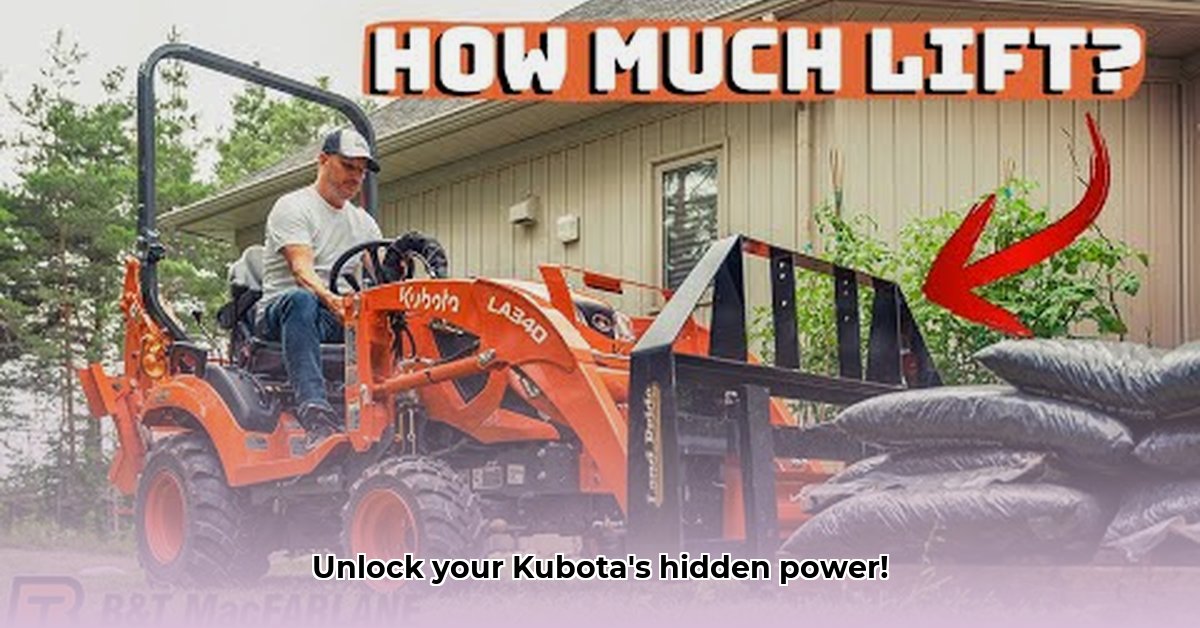
Adding a forklift attachment (typically pallet forks or similar lifting implements, not a dedicated forklift) significantly expands your Kubota tractor's capabilities. However, choosing the correct attachment is crucial for both efficiency and safety. This section guides you through the selection process.
What factors should I consider when selecting a forklift attachment for my Kubota tractor? This is a key question to answer before making a purchase. For information on Kubota tractor oil types, see this helpful guide: Kubota oil guide.
First, consult your Kubota tractor's owner's manual to determine its maximum lift capacity. Exceeding this limit is dangerous and can damage your equipment. Next, assess the types of loads you'll be handling. Will you primarily move pallets? Or will you need to lift and carry less uniform materials? This will help determine the appropriate attachment type.
Common attachment types include:
- Pallet Forks: Ideal for handling standard pallets of goods. They offer efficiency and are relatively straightforward to use.
- Grapples: Useful for irregular loads like brush, logs, or debris. They provide versatility but might be slower than pallet forks.
- Buckets: Suited for moving soil, gravel, or feed. They’re durable but less precise than forks for pallet work.
Several manufacturers, like Land Pride 1, offer a variety of attachments compatible with Kubota tractors. Consider features like quick-attach systems, which significantly reduce setup time.
| Manufacturer | Model | Lifting Capacity (lbs) | Quick-Attach? | Notes |
|---|---|---|---|---|
| Land Pride | LPXXXXXX | 1500 | Yes | Suitable for smaller Kubota models |
| Land Pride | LPYYYYYY | 3000 | Yes | Ideal for larger Kubota models |
| Other Brand | Model ZZZZZZ | 2000 | No | Requires manual pin attachment; more time-consuming |
Remember: Safety is paramount. Never exceed the rated lifting capacity of your attachment or your Kubota tractor.
Safety Procedures: A Comprehensive Checklist
Safe operation is non-negotiable. Before operating your Kubota tractor with a forklift attachment, meticulously follow this pre-operation checklist:
Hydraulic Fluid Check: Ensure hydraulic fluid levels are within the manufacturer's recommended range. Low levels can lead to reduced lifting power and potential equipment damage.
Attachment Inspection: Thoroughly inspect the attachment's connection to the tractor. Verify that all pins, bolts, and locking mechanisms are securely fastened. Any looseness compromises stability and safety.
Load Balancing: Distribute the weight evenly across the forks or attachment. An unbalanced load increases the risk of tipping or accidents.
Counterweight Use (if necessary): Consult your tractor's owner's manual to determine if counterweights are needed for heavier loads. Adding counterweights improves stability and reduces the risk of tipping.
Personal Protective Equipment (PPE): Always wear appropriate PPE, including safety glasses, gloves, sturdy steel-toe work boots, and a hard hat (especially when working with elevated loads).
Area Clearance: Ensure the area around the tractor is free from obstructions and hazards. Clear a sufficient working radius to prevent collisions or accidents.
Review Operator's Manuals: Familiarize yourself with the operation and safety instructions provided in both your Kubota tractor's manual and the forklift attachment's manual. This is vital for safe operation.
"Never compromise on safety," advises Dr. Emily Carter, PhD, Agricultural Engineering, University of California, Davis. "Meticulous pre-operation checks are essential to mitigating risks and preventing accidents."
Step-by-Step Operation: Attaching and Using the Forklift Attachment
This section provides a detailed, step-by-step guide to using your forklift attachment safely:
Attachment Connection: Carefully connect the forklift attachment to your Kubota tractor's designated lift points, following the manufacturer's instructions precisely. Ensure a secure connection to prevent accidental detachment.
Hydraulic Lift: Slowly and steadily raise the forks using your tractor's hydraulic controls. Avoid sudden movements, which could cause instability.
Precise Positioning: Carefully position the forks under the load, ensuring even distribution of weight. Accurate positioning is essential for smooth lifting and movement.
Lifting the Load: Gently and gradually raise the load, monitoring for any signs of instability. Stop immediately if any problems occur.
Maneuvering the Load: Move the load slowly and deliberately, avoiding sudden turns or sharp movements. Be mindful of your surroundings and any potential hazards.
Lowering the Load: Gently and carefully lower the load to the ground. Avoid sudden drops, which can damage the load or the equipment.
How can I effectively maneuver a loaded forklift attachment in tight spaces? Practice maneuvering in a large, open area before attempting to work in confined spaces. Smooth, controlled movements are key.
Maintenance and Troubleshooting: Keeping Your Equipment in Top Shape
Regular maintenance is essential to prolong the life of your forklift attachment and your Kubota tractor. Neglecting maintenance can lead to premature wear, costly repairs, and potential safety hazards.
Regular Lubrication: Lubricate all moving parts according to the manufacturer's recommendations. This reduces friction and wear.
Hydraulic System Inspection: Regularly inspect hydraulic lines and fittings for leaks or damage. Leaks can quickly lead to failure.
Bolt and Pin Checks: Periodically check all bolts, pins, and other fasteners for tightness and security. Loose components can compromise structural integrity.
Troubleshooting: If you encounter problems, consult your operator's manuals for troubleshooting guidance. If the problem persists, contact a qualified mechanic.
Legalities and Regulations
Operating a Kubota tractor with a forklift attachment is subject to various safety regulations and legal requirements. Familiarize yourself with all applicable local, state, and federal regulations before operation.
Conclusion: Prioritizing Safety and Efficiency
Using a forklift attachment with your Kubota tractor significantly enhances its versatility. However, safety must always be the top priority. By following the steps and safety procedures outlined in this guide, you can effectively and safely utilize your Kubota to handle a wider range of tasks. Remember to consistently review the manufacturer's instructions and exercise caution.